
| By a wide margin, my favorite book this year is Alchemy by Rory Sutherland. He’s the Vice Chairman of Ogilvy UK, one of the world’s largest advertising and marketing agencies. The “alchemy” Sutherland refers to is in the subtitle: The Magic of Original Thinking in a World of Mind-Numbing Conformity. In his witty, sarcastic, and insightful style, Sutherland argues that focusing on human irrationality—and applying a bit of behavioral science—can unlock disproportionate value. Small, counterintuitive changes often produce outsized results that logic and data alone can’t explain. In Part III, on the topic of signaling (Brits spell it with two L’s), Sutherland writes: “Reciprocation, reputation, and pre-commitment signalling are the three big mechanisms that underpin trust.” Let’s break down those three ideas and see how they show up in the construction industry—and how we can use them to become better leaders. |
| 1. Reciprocation The tagline of our Construction Leadership Podcast (and my company and my life, for that matter) is: You are owed nothing. Deliver value first. |

| That belief comes from reciprocity—the human tendency to repay those who do something for us. Our ancestors 30,000 years ago learned that generosity and proactive giving increased their odds of survival and reproduction. Reciprocity is baked into our DNA. (Yes, so is warring, but let’s stay positive for now.) Every culture values relationships, but some—like Hispanic cultures—are more collectivist than our individualistic, Uncle Sam-style American culture. On a jobsite, understanding that distinction is powerful. By giving first—buying lunch, replacing damaged PPE, handing out bilingual high-vis tees—you’re not just being nice. You’re triggering reciprocity and accelerating trust. A bit of alchemy: Giving first, no matter how small the gesture, builds connection and speeds collaboration. |
| 2. Reputation Every organism on earth shares two goals: survive and reproduce. To do that, a little paranoia toward strangers makes sense. That instinct is still with us today. When you walk onto a jobsite, into a trailer, or into a conference room, your reputation arrives first. The best leaders actively build and market theirs. How? They get people talking. As a tall Spanish-speaking redhead, I’ve learned that my first day on any jobsite—whether as a project manager or consultant—is all about marketing. I surprise a few concrete workers by joking with them in Spanish, then hand out my business card. It’s actually a baseball card, printed by the same Dallas printer that works with Topps. I’ve got English and Spanish versions. Within an hour, every Spanish speaker on the site knows who I am. My goal is for them to be saying: “Oye güey, watch out for that ginger—he’ll stop and talk to anyone.” That’s the point. It’s less about ego and more about authenticity and curiosity. I can’t do my job if people won’t talk to me. A bit of alchemy: Do you have bilingual business cards? What small tools or habits could build your reputation as a leader who bridges cultures on the jobsite? |
| 3. Pre-Commitment Signaling “Pre-commitment signaling” sounds fancy and academic, especially when Sutherland says it with an Oxford accent. Don’t be intimidated, because this is everywhere. Pre-commitment signaling is when you prove your trustworthiness upfront by making costly and visible commitments that show your intentions are real. Some examples: |
- O’Reilly Auto Parts dominates Spanish-language radio. In 2024, they won the Radio Marketer of the Year Award, crediting multicultural campaigns for their growing market share. That’s pre-commitment signaling—spending a big slice of their $100M ad budget to show Hispanic customers they’re “all in.”
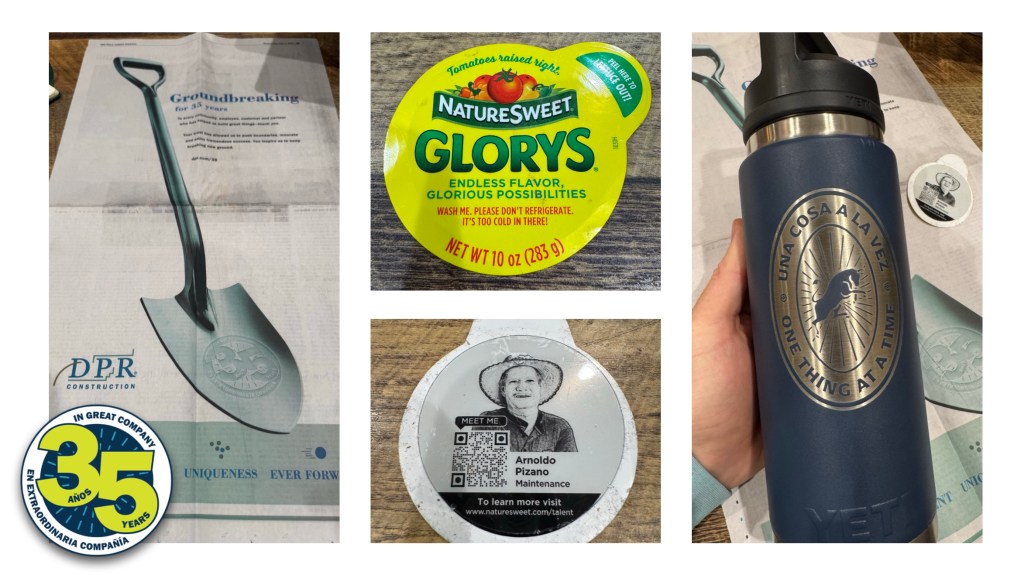
- NatureSweet Tomatoes includes a QR code on their packaging so you can “meet” employees like Arnoldo Pizano from Maintenance. That’s another signal: “We care enough to show you who grows your food.”
- DPR Construction ran a bilingual full-page ad in The Wall Street Journal celebrating their 35th anniversary. Sure, it thanked employees and customers, but it also signaled long-term commitment to innovation and inclusion.
(And yes, our bilingual Yetis are a form of pre-commitment signaling too.)
A bit of alchemy: Invest in your own pre-commitment signals.
- Make sure your website is available in Spanish.
- Record short videos of your Spanish-speaking employees sharing what they love about your company.
- Plan a World Cup viewing event for your crews next summer—maybe even sponsor a local soccer team?
The Real Gold
For centuries, brilliant people—including Sir Isaac Newton—tried the literal form of alchemy: turning base metals into gold. But Sutherland’s alchemy is far more accessible; it’s embracing that fact that humans aren’t purely logical.
Small, thoughtful, symbolic acts often outperform big, expensive plans and Gantt charts.
On a construction site, that means trust isn’t built through contracts and safety meetings—it’s built through small gestures that signal genuine commitment: bilingual cards, shared lunches, Spanish-language videos, and yes, even full-page anniversary ads.
The best construction leaders embrace what Sutherland preaches: in a world obsessed with data and efficiency, there’s riches to be found in the value of small, personal, and sometimes counterintuitive acts of generosity.
What small act of alchemy could you perform this week to speed trust on your jobsite?
Thanks for reading.
You are owed nothing. Deliver value first.

Subscribe here to get the next edition of Good to Excelente straight to your inbox—cultural intelligence insights and practical advice to help you communicate more effectively, lead inclusively, and build stronger relationships.
Copyright ©2025
Bradley Hartmann & Co.
All rights reserved.
Contact Bradley Hartmann:
bradley@bradleyhartmannandco.com
 Good to Excelente Newsletter
Leave a comment