
Know someone who’d enjoy The Good to Excelente Newsletter?
Forward this to them so they can subscribe here—and never miss a Wednesday edition packed with cultural intelligence insights and practical advice.

Three summers ago, my family visited Barcelona, Spain. As proper tourists, we toured Camp Nou, FC Barcelona’s stadium, museum, and gift shop. I left with a t-shirt and two books about the man who spent two decades with the club and made it legendary.
No, not Lionel Messi.
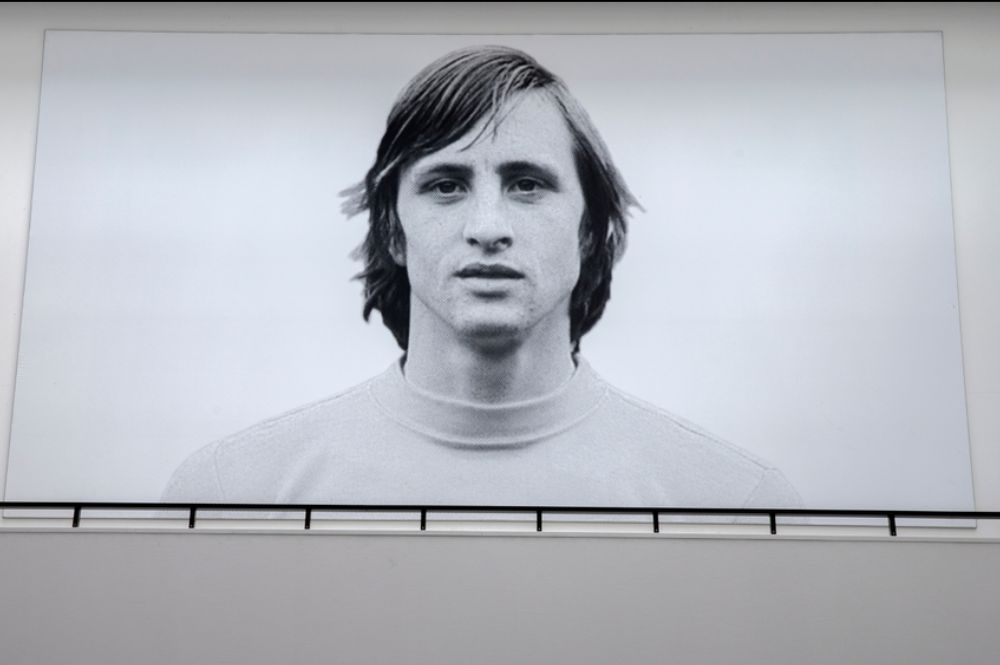
It was this Dutchman, Johan Cruyff (KROIF).
You may remember our recent story about Cruyff accidentally referring to his “skin chicken” instead of “goosebumps.”
It was a funny reminder that growth often requires the willingness to make mistakes.
But that story only scratches the surface.
What made Johan Cruyff extraordinary went beyond his willingness to butcher a language. He was relentlessly curious about people, ideas, and different perspectives.
If you’re looking for an American sporting icon who serves as a reasonable comparison to Cruyff, well, there really isn’t one.
Imagine a floppy-haired, chain-smoking Baby Boomer mashup of Larry Bird, Vince Lombardi, and Steve Jobs. He had Bird’s genius as a player, Lombardi’s influence as a coach, and Jobs’ imagination and ego to rethink how the game was played.
Three stories illustrate how Cruyff turned cultural and linguistic curiosity into a competitive advantage.
1. Hunting with the handball coach.
FC Barcelona is best known for its football teams, but it also has basketball, volleyball, rugby, and handball. Most soccer coaches viewed these other sports as a distraction from the main attraction.
Not Cruyff.
He actively sought out other Barça coaches, including the handball coach, hunting for new ideas. Cruyff doubted that meaningful innovation would come from staring at his own team or obsessing over the competition. He would find it scavenging within other disciplines.
The same idea applies to us.
It’s easy to look for answers inside our construction industry because it’s comfortable. The challenge is that everyone else is looking here too.
Sometimes the best ideas come from completely different environments. Other times, they come from people who simply see the world through a different cultural lens.
2. Hiring an opera singer.
Cruyff was always looking for an edge and believed elite performance could come from unexpected places. While coaching Ajax, he hired an opera singer to teach his players how to breathe.
His thinking was simple: If I investigate enough unlikely places, I’ll probably uncover some novel ideas.
That’s cultural intelligence in action.
Leaders with cultural intelligence believe valuable ideas can come from people whose experiences are very different from your own.
3. Challenging your own assumptions.
One of the biggest obstacles to growth is that we’re convinced by what we already know. Yet every leader has blind spots.
Every organization has assumptions that become “the way we’ve always done it.”
They show up when leaders assume someone isn’t interested because they communicate differently.
They show up when we mistake silence for agreement.
They show up when we assume our way of solving a problem is the only way.
Curiosity gives us a better chance of discovering them before they become barriers.
For all his brilliance, Cruyff had blind spots of his own.
The same man who hired an opera singer to maximize breathing was also a lifelong smoker.
His habits forced him to retire early at 31.
A heart attack came at 44.
Lung cancer took his life at 68.
And maybe that’s the final lesson?
For all our strengths, we all have blind spots. But the more curious we become, the fewer blind spots we carry.
Cruyff believed ideas were worth chasing regardless of where they came from—a different sport, a different profession, a different country, or a different person.
And that’s a competitive advantage every leader can pursue.
So get out there, stay curious, and keep hunting.
Thanks for reading.
We’ll see you back here in two weeks.

If you lead people, this podcast is for you.
Subscribe to The Construction Leadership Podcast for practical leadership ideas that strengthen teams and organizations.
Subscribe here:
Apple Podcasts | Spotify
Copyright © 2026
Bradley Hartmann & Co.
All rights reserved.

Contact Bradley Hartmann:
bradley@bradleyhartmannandco.com


Leave a Reply