Know someone who’d enjoy The Good to Excelente Newsletter?
Forward this to them so they can subscribe here—and never miss a Wednesday edition packed with cultural intelligence insights and practical advice.
Question:
Derek from Arizona writes: “With AI translation tools getting better every year, are language barriers on the jobsite basically becoming a thing of the past? Or are there still risks leaders should be aware of?”
Answer:
Derek: AI has come a long way, baby!
A superintendent can now pull out their phone, speak into an app, and have instructions translated into Spanish almost instantly.
Ten years ago, that felt as realistic as the Jetsons’ flying car.
This speed of communication often means fewer delays and fewer awkward exchanges.
But here’s the catch: Just because something is translated correctly doesn’t mean it’s being communicated effectively.
Language and communication are not the same thing.
If that feels counterintuitive, I get it.
Let’s break this down into three parts.
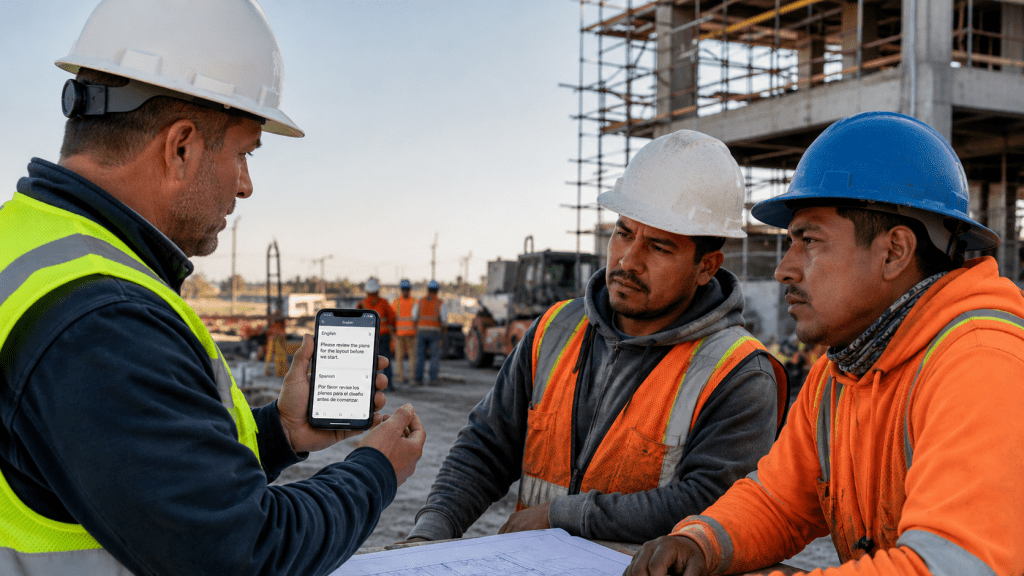
1. AI can translate words. Humans interpret meaning.
Imagine a superintendent saying: “Hey bro, we need to tighten this up.”
An experienced American worker understands what that means immediately.
Pick up the garbage.
Pay more attention to details.
Organize the rebar rolling all over.
But direct translations don’t always carry the same emotional meaning, context, or intent across cultures.
Sometimes the words transfer.
Sometimes the meaning doesn’t.
This gap creates confusion, frustration, and occasionally embarrassment for everyone involved. Especially when nobody realizes the misunderstanding happened in the first place.
2. Communication happens long before words are spoken.
Construction leaders often focus heavily on verbal instructions.
But workers are constantly reading other signals too:
Tone.
Facial expressions.
Body language.
These things don’t show up in translation software.
And culturally speaking, different groups interpret behavior differently. For example, some cultures view direct eye contact as confidence and honesty.
Others may interpret prolonged eye contact as aggressive or disrespectful.
Same behavior.
Two different interpretations.
That’s why cultural intelligence matters.
Because effective leadership isn’t just about what you say. It’s about how your message is experienced by the other person.
3. Blind trust in translation tools can create real problems.
AI is fast.
But in construction—as you know—doing it fast and doing it right are two different things.
And if you don’t speak the target language yourself, there’s another challenge: How do you know if the translation is correct?
You don’t.
That’s one reason professional translation services still matter, especially areas that concern safety and legal on the jobsite.
Not because technology is useless—but because nuance matters. And sometimes a small translation mistake can create a very large operational problem.
So here’s my advice:
AI is an incredibly useful tool for reducing language barriers.
Use it.
Practice with it.
Experiment with it.
But don’t confuse translation with understanding.
Technology can help people exchange words faster.
But it’s cultural intelligence that helps leaders like you build trust, clarity, and connection.
And on the jobsite, those three things matter a whole lot more than perfectly translated sentences.
Thanks for reading.
We’ll see you back here in two weeks.

Subscribe here to get the next edition of Good to Excelente straight to your inbox—cultural intelligence insights and practical advice to help you communicate more effectively, lead inclusively, and build stronger relationships.
If you lead people, this podcast is for you.
Subscribe to The Construction Leadership Podcast for practical leadership ideas that strengthen teams and organizations.
Subscribe here:
Apple Podcasts | Spotify
Copyright © 2026
Bradley Hartmann & Co.
All rights reserved.
Contact Bradley Hartmann:
bradley@bradleyhartmannandco.com


Leave a Reply