| Know someone who’d enjoy The Good to Excelente Newsletter? Forward this to them so they can subscribe here—and never miss a Wednesday edition packed with cultural intelligence insights and practical advice. |

Two weeks ago, I led a leadership training session at a regional Safety Conference in North Texas managed by the AGC chapter TEXO.
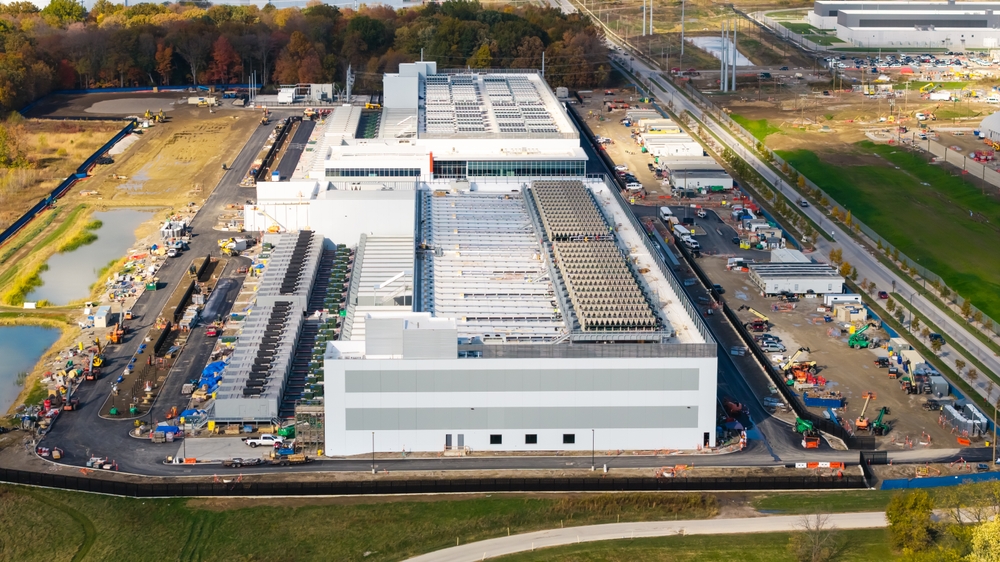
The dominant discussion point was data centers.
Shocker, I know.
There’s a $10B project in Turkey, Texas.
(Yep, real place.)
The stress of 80-hour weeks.
The impact of living on-site.
New contractors.
New crews.
Lots of pressure.
There’s plenty we know about this data-center boom: There’s a ton of work. There’s money to be made. And eventually, this boom cycle will end.
But what the safety professionals talked about most was the uncertainty experienced by the people doing the actual work.
Humans don’t handle uncertainty well.
Especially under pressure.
Does anyone else seem concerned?
Does this seem normal to you?
Does my supervisor think I’m doing okay?
How’s my family doing without me?
So, what do we do?
We turn to each other.
Whether it’s unusual behavior coming from a person or a situation, we say things like, “Well, if you see something, say something.”
But think about what we’re asking someone to do when they “say something.”
They may have to stop the work.
Question a decision.
Admit they don’t understand.
Or tell someone with more experience, status, or authority that something doesn’t look right.
For someone raised in a typical low-Power-Distance American culture—like me, from Chicago—speaking up may feel like a reasonable thing to do.
Maybe.
For a Hispanic worker, there may be another cultural dynamic at play.
In Good to Excelente, I write about Power Distance, which describes how different cultures view authority.
The United States has a relatively low Power Distance culture. That means we’re comfortable questioning authority. We expect employees to offer their opinions, challenge ideas, and speak up when they disagree.
Many Latin American cultures tend to have higher Power Distance. That means there is a greater respect for hierarchy and the person in charge.
That can create a communication gap on the jobsite.
Here’s an example: A safety professional finishes explaining a task and asks, “Everybody good?”
The crew nods.
“Any questions?”
Silence.
Sweet. Let’s get to work!
Maybe.
That head nod might mean, I understand. It might also mean, I respect you. I’m not going to challenge you in front of everyone. I’ll figure out what the heck you meant when I get back with my crew.
If you’ve got the term safety in your title, you better know the difference.
This is true on any job.
Now factor this uncertainty into a fast-moving project with long hours, surrounded by new faces and lots of visibility.
Instead of checking for agreement, invite explanation.
Instead of asking, “Do you understand?” ask:
“Walk me through how you’re going to approach this.”
Instead of “Any questions?” ask:
“What concerns you about this work?”
Or: “What could go wrong here?”
If you’re working with a Spanish-speaking crew, try this:
¿Qué te preocupa?
(kay tay pray-oh-KOOH-pah)
What concerns you?
Then listen.
Even if you don’t understand every word, pay attention to the person, their tone, and their behavior. Humans don’t always tell us exactly what they’re thinking just because we asked.
And this is where cultural intelligence informs the best leaders.
You have to understand how the person across from you views your authority, builds trust, handles disagreement, and communicates uncertainty.
For safety professionals, the consequences of missing those signals can be much greater.
Because on an 80-hour week, on a multibillion-dollar project, with people from different cultures trying to keep pace, the cost of misunderstanding a casual head nod is high.
Thanks for reading.
We’ll see you back here in two weeks.

If you lead people, this podcast is for you.
Subscribe to The Construction Leadership Podcast for practical leadership ideas that strengthen teams and organizations.
Subscribe here:
Apple Podcasts | Spotify
Copyright © 2026
Bradley Hartmann & Co.
All rights reserved.


Leave a Reply